


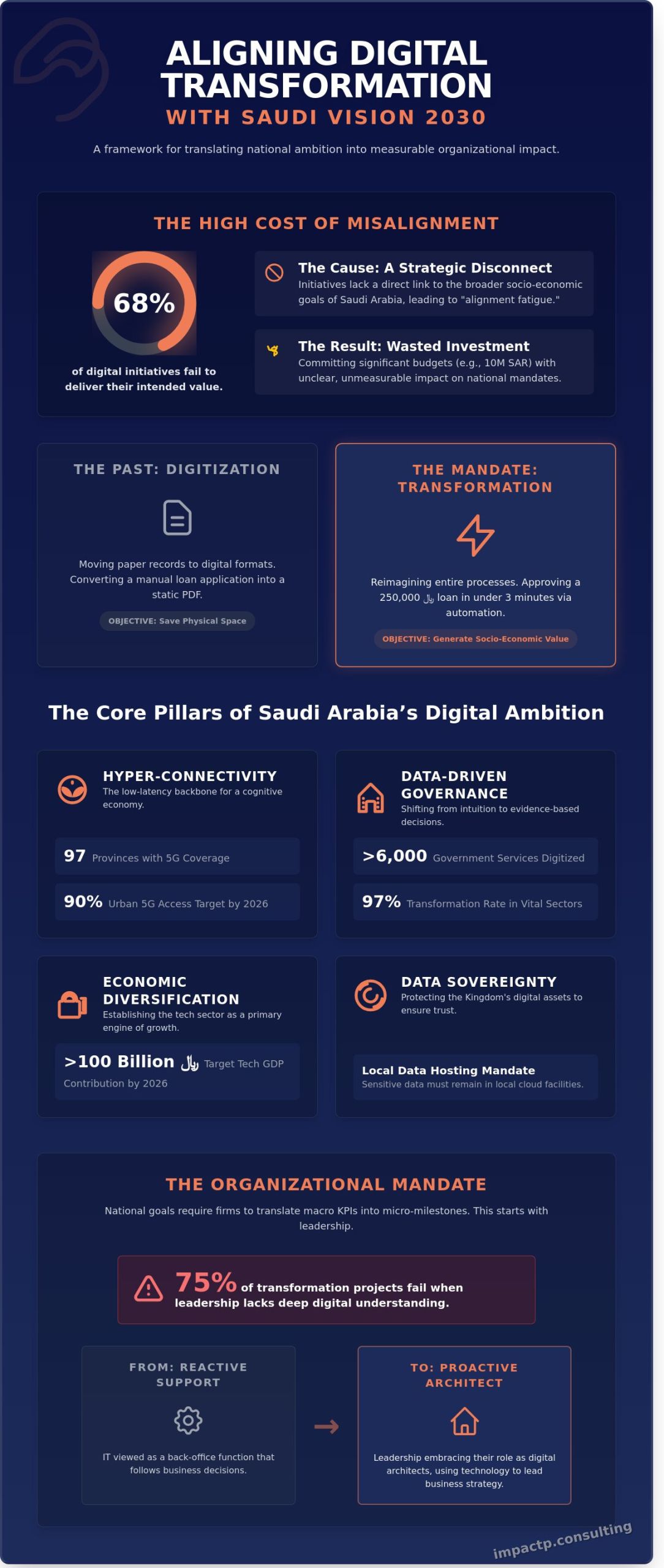
What if the most expensive part of your digital transformation vision 2030 isn’t the software you buy, but the alignment fatigue your team experiences? A 2023 industry study found that 68% of digital initiatives in the Kingdom fail to deliver their intended value because they lack a direct link to the broader socio-economic goals of Saudi Arabia. You’ve likely felt the pressure to innovate while wrestling with a shortage of local talent who can bridge the gap between high-level strategy and technical execution. It’s frustrating to commit a 10 million SAR budget when the measurable impact on the national mandate remains unclear.
We recognize that you’re seeking more than just a technological upgrade; you’re building a legacy of resilience. This article shows you how to align your digital strategy with the national mandate to drive sustainable growth. We’ll explore a structured framework for measuring digital success through socio-economic impact and organizational health. This approach ensures you can move forward with the confidence that your investments are creating genuine value for the Kingdom.
Key Takeaways
- Understand how digital integration serves as the primary engine for achieving the “Vibrant Society” and “Thriving Economy” pillars within the Saudi landscape.
- Learn to prioritize strategic alignment and change management over simple software acquisition to ensure your technology investments yield genuine organizational resilience.
- Discover a 5-step roadmap for aligning your internal initiatives with the digital transformation vision 2030 to drive measurable socio-economic impact.
- Explore the shift toward evidence-based governance and how hyper-connectivity provides the foundation for innovation in smart ecosystems like NEOM and Riyadh.
- Identify the strategic advantages of collaborating with local Riyadh-based partners who bridge the gap between global standards and the specific nuances of the Kingdom.
Defining Digital Transformation in the Context of Vision 2030
Digital transformation in the Kingdom represents far more than a simple upgrade of legacy software or the adoption of new applications. It’s a fundamental shift where digital technology permeates every layer of government and commerce to generate tangible socio-economic value for every resident. This evolution acts as the core engine driving the “Vibrant Society” and “Thriving Economy” pillars of Saudi Vision 2030. We aren’t just discussing faster internet speeds; we’re witnessing a structural rebirth of how the nation functions. The Digital Government Authority (DGA) serves as the primary regulator, establishing the rigorous standards and compliance frameworks that ensure interoperability and service excellence across all public sector entities.
Leaders must distinguish between digitization and true transformation to avoid strategic stagnation. Digitization was the objective of the last decade, focusing on moving from paper-based records to digital formats to save physical space. Transformation is the current mandate, which involves reimagining the entire citizen or customer journey from the ground up. If a Riyadh-based firm simply converts a manual loan application into a static PDF, they’ve achieved digitization but failed at transformation. A true digital transformation vision 2030 strategy would involve using automated credit scoring and instant identity verification to approve a 250,000 ﷼ facility in under three minutes without human intervention.
The Role of MCIT and SDAIA in Shaping the Digital Landscape
The Ministry of Communications and Information Technology (MCIT) has established a clear trajectory for 2026, targeting a tech sector contribution to GDP exceeding 100 billion ﷼. Their focus on infrastructure ensures that 90% of urban areas will have access to 5G connectivity by the end of that period. Simultaneously, the Saudi Data and AI Authority (SDAIA) is centralizing national data assets through the National Data Bank to fuel high-level strategic decisions. This centralization is coupled with strict data sovereignty laws. New regulations require that sensitive data remains within local cloud hosting facilities in Riyadh, ensuring that the Kingdom’s digital assets are protected while providing a stable foundation for corporate investment in cloud-native technologies.
Why National Ambition Requires Local Organizational Agility
National goals only reach their full potential when individual firms translate macro-level KPIs into specific, actionable micro-milestones. Organizations can’t afford to view IT as a reactive support function anymore. There’s a necessary shift toward proactive strategic visioning where technology leads the business strategy rather than following it. For a company to remain resilient, digital literacy must become a priority at the board level. Recent data suggests that 75% of transformation projects fail when the leadership team lacks a deep understanding of digital ecosystems. Riyadh-based executives need to move beyond delegating technical decisions to back-office departments. They must embrace their role as digital architects who understand how data flows through their organization to create lasting impact. This cultural shift ensures that the firm doesn’t just survive the changes but actively shapes the future of the Saudi market.
The Core Pillars of Saudi Arabia’s Digital Ambition
Saudi Arabia isn’t merely adopting technology; it’s re-engineering its national DNA. This structural evolution is anchored by the digital transformation vision 2030 framework, which moves beyond simple digitization toward a fully integrated, cognitive economy. Success here depends on a robust foundation of hyper-connectivity. As of 2024, the Communications, Space and Technology Commission (CST) reported that 5G technology has reached over 97 provinces, providing the low-latency backbone required for smart cities like NEOM and the expansion of Riyadh. These urban centers aren’t just collections of buildings; they’re living laboratories where 5G enables real-time traffic management, autonomous logistics, and energy grids that self-optimize based on demand.
Data-driven governance represents the second pillar. The days of intuition-based policy are fading. Through the National Transformation Program, government entities now utilize centralized data lakes to inform every decision. By 2023, the Kingdom had already digitized more than 6,000 government services, achieving a 97% digital transformation rate across vital sectors. This shift ensures that resource allocation is precise, measurable, and transparent. It’s a move toward systemic efficiency that mirrors the analytical rigor we bring to organizational development.
The “Digital First” citizen experience is the most visible manifestation of this ambition. Platforms like Absher and Nafath have simplified life for millions, reducing administrative wait times from weeks to seconds. However, this interconnectivity demands world-class cybersecurity resilience. The Saudi government has recognized this by investing heavily in the National Cybersecurity Authority (NCA). With the local cybersecurity market expected to grow to SAR 21 billion by 2026, protecting digital assets is now a matter of national sovereignty. Leaders who want to align their internal systems with these national standards often find that a tailored strategic roadmap is the most effective way to ensure long-term resilience.
Artificial Intelligence and the Future of Saudi Business
By 2026, AI will transition from an experimental tool to a core operational requirement for the Saudi private sector. We expect to see widespread application of predictive AI in supply chain management and retail, contributing to an estimated SAR 500 billion boost to the GDP by 2030. Within the digital transformation vision 2030 strategy, AI also plays a critical role in “Socio-Economic Impact” assessments. These metrics are now mandatory for major projects to ensure that automation doesn’t replace workers, but rather elevates them. The goal is to balance high-tech efficiency with the national priority of increasing high-value local employment, creating roles that require the intellectual elegance and analytical skills of a modern workforce.
Digital Inclusion and Human-Centric Design
Technology only delivers value when it’s adopted by the people it serves. This is why human-centricity is the secret to the Kingdom’s high adoption rates. While internet penetration in Saudi Arabia reached 99% in 2023, the focus has shifted to user experience (UX) and accessibility. Ensuring that digital services are intuitive for all segments, including the elderly and those in rural areas, is a cornerstone of organizational excellence. When digital tools are designed with empathy and psychological insight, they cease to be hurdles and become enablers. This approach fosters a culture of trust and continuous improvement, which is essential for any large-scale change initiative to take root and flourish.
Moving Beyond “Tech-First”: Why Strategy Precedes Software
A common fallacy exists in Riyadh’s boardrooms: the belief that a 2.5 million SAR ERP implementation is the finish line. It isn’t. Buying software without a strategy is like purchasing a high-speed train without laying the tracks. Within the framework of the digital transformation vision 2030, technology serves as the engine, but the organizational strategy is the driver. We often see leaders prioritize procurement over purpose, leading to expensive tools that sit idle or, worse, complicate existing workflows. Real transformation requires an “Impact First” mindset. This means defining the specific operational outcome, such as a 25% reduction in procurement cycle time, before a single line of code is written or a vendor is selected.
True success depends on the critical link between technology and change management. If your team doesn’t understand why a process is changing, they’ll find ways to bypass the new system. We view digital tools as enablers of human potential, not replacements for sound management. When organizations align their digital roadmap with their long-term business goals, they move from being “tech-heavy” to “strategy-led.” This shift is what separates the pioneers of the digital transformation vision 2030 from those who merely digitize their old inefficiencies.
The Hidden Costs of Strategy-Free Implementation
In a 2023 study by IDC, nearly 70% of digital initiatives in the Gulf region failed to meet their initial ROI targets due to a lack of strategic foresight. This failure often manifests as technical debt, where organizations spend over 1.2 million SAR annually just to maintain disparate, “siloed” systems that don’t talk to each other. These silos create data fragmentation, making it impossible for leadership to gain a single source of truth. Employee resistance remains the primary barrier; when 65% of your workforce feels overwhelmed by new tools, productivity drops by an average of 15% in the first quarter post-launch. Culture doesn’t just eat digital strategy for breakfast; it determines whether the technology ever makes it to the table.
- Technical Debt: The cumulative cost of fixing “quick-fix” software choices made without a long-term architectural plan.
- The Silo Effect: Departments using isolated platforms that prevent cross-functional collaboration and data sharing.
- Change Fatigue: A 2022 survey showed that Saudi employees in the public sector reported higher stress levels when digital tools were introduced without adequate training.
Organizational Excellence as a Digital Catalyst
Digital tools can’t fix a broken process. They only make it move faster. This is why we advocate for aligning digital workflows with local excellence models, such as the King Abdulaziz Quality Award (KAQA) or the EFQM framework. By applying lean processes before migration, organizations can reduce the complexity of their digital transition by up to 40%. This preparation ensures that the software automates a streamlined, high-value workflow rather than a redundant one.
Strategic advisory plays a vital role in preventing expensive procurement mistakes. We’ve seen organizations save upwards of 3.8 million SAR by simply identifying that they didn’t need a bespoke solution when a configured off-the-shelf product would suffice. A structured approach ensures that every Riyal spent on technology is an investment in organizational resilience. By focusing on excellence first, Saudi entities ensure their digital infrastructure is built on a foundation of operational maturity, which is the only way to secure a sustainable return on investment in the modern economy.
A 5-Step Roadmap for Aligning Digital Initiatives with Vision 2030
Success in the Saudi market requires more than adopting new software; it demands a structural realignment with the Kingdom’s long-term aspirations. Organizations that treat technology as a siloed expense often see their ROI stagnate. Real value emerges when digital strategy serves as the engine for national contribution. We’ve identified five critical steps to ensure your digital transformation vision 2030 remains on track and delivers measurable results.
- Step 1: Conduct a Digital Readiness and Impact Audit. Before investing a single Riyal, you must understand your baseline. This isn’t just a technical check. It’s an assessment of whether your current culture can support 20% or 30% faster decision-making cycles.
- Step 2: Define Strategic North Star Metrics Aligned with National KPIs. Your internal goals should mirror the National Transformation Program. If the government targets a 70% increase in digital service adoption, your metrics should reflect how your firm contributes to that ecosystem.
- Step 3: Architect a Change Management and Talent Development Plan. Technology is secondary to people. You need a roadmap that upskills local Saudi talent, ensuring your team can manage complex systems without permanent reliance on external vendors.
- Step 4: Execute through an “Operate-Build-Transfer” (OBT) model. This ensures continuity. You don’t just buy a solution; you build a capability that eventually lives entirely within your walls.
- Step 5: Measure Socio-Economic Impact and Iterate. By 2025, successful firms will report on how their digital spend improves life for citizens or creates high-value jobs. This data is vital for board-level buy-in and government compliance.
Executing the OBT Model for Sustainable Continuity
The Operate-Build-Transfer model is particularly effective for Riyadh-based firms facing a competitive talent market. Instead of a traditional consultancy approach where the expert leaves and the system gathers dust, OBT focuses on knowledge equity. A partner operates the new digital function while simultaneously building your internal team’s skills. By the time the transfer phase concludes, your organization has shifted from external dependency to internal mastery. This approach protects your 50,000,000 SAR investments by ensuring the intellectual property and operational “know-how” stay in Saudi Arabia.
Measuring What Matters: Digital KPIs in 2026
The definition of success is shifting. By 2026, simply reporting on system uptime or server speeds won’t satisfy stakeholders. You’ll need to demonstrate value realized through specific socio-economic lenses. For a retail giant, this might mean tracking how digital logistics reduced carbon footprints by 15%. For a government entity, it’s about citizen satisfaction scores reaching 90% or higher. Reporting these metrics to boards requires a shift from technical jargon to impact-based storytelling. You’re no longer just managing IT; you’re managing a pillar of the national economy.
We help organizations bridge the gap between ambitious strategy and tangible local impact. Explore how we can refine your digital transformation vision 2030 by visiting our strategic advisory services today.
Partnering for Impact: Executing Your 2030 Digital Vision
Global consultancies often arrive in Riyadh with pre-packaged frameworks designed for London or New York. These models frequently stumble against the unique cultural and regulatory architecture of the Kingdom. Impact Partners operates differently. We recognize that true digital transformation vision 2030 requires more than just technical migration; it demands a deep alignment with the National Transformation Program’s specific mandates. As a Riyadh-based partner, we breathe the same air as your stakeholders. We understand the nuances of the Saudi business ecosystem, from the local labor law requirements to the specific data sovereignty standards set by the National Data Management Office (NDMO).
Our approach blends global strategic expertise with homegrown talent that understands the heartbeat of the Saudi market. We don’t believe in silos. Instead, we integrate Strategy, Digital, and Change Management under one roof. This holistic view ensures that your technological investments aren’t just expensive ornaments but are drivers of tangible growth. We’ve seen organizations invest over 5,000,000 SAR in software only to see a 15% adoption rate because the human element was ignored. We prevent this by ensuring your team is as ready for the future as your infrastructure is.
From Strategic Roadmap to Operational Excellence
Execution is where most visions falter. Our methodology begins with a rigorous assessment of your current digital maturity, followed by the creation of a roadmap that prioritizes high-impact wins. We don’t just leave you with a slide deck. We actively support your recruitment efforts to fill the digital talent gap, helping you find the specialized roles that are currently in high demand across the KSA tech sector. To help you navigate the next phase of your journey, we invite you to a Visioning Session. This collaborative workshop is designed to align your 2026 goals with the broader national objectives, ensuring your organization remains resilient and competitive.
- Strategic Precision: We align every digital initiative with your core business objectives and the Kingdom’s broader economic goals.
- Local Expertise: Our team understands the specific regulatory landscape of Saudi Arabia, ensuring 100% compliance with local data and privacy laws.
- Human-Centric Change: We focus on upskilling your workforce, turning potential resistance into active participation through structured change management.
- Rigorous Execution: We move beyond theory to deliver measurable results that reflect in your bottom line and operational efficiency.
Conclusion: The Future is Digital, the Impact is Human
The journey toward 2030 is gaining velocity. Digital alignment is no longer a choice for Saudi organizations; it’s the baseline for survival. While the tools we use are sophisticated, the ultimate goal remains human. It’s about creating better experiences for citizens, more efficient environments for employees, and sustainable value for shareholders. The time for cautious observation has passed. Leadership today is defined by the courage to move from abstract planning to impactful, technology-driven execution. Your organization has the potential to be a lighthouse in the Kingdom’s digital landscape.
Don’t let your strategy gather dust on a shelf while the market evolves. Take the decisive step toward a future that is both technologically advanced and deeply rooted in local values. Partner with Impact Partners to lead your digital evolution and ensure your organization plays a defining role in the digital transformation vision 2030. Together, we can turn your strategic roadmap into a legacy of lasting impact.
Realizing Your Mandate in the Kingdom’s Digital Future
The journey toward a modernized Saudi economy requires more than just the procurement of high-end software. Realizing the digital transformation vision 2030 depends on a strategic shift where organizational culture and long-term resilience take center stage. Success lies in moving from isolated digital projects to a holistic ecosystem that supports national objectives. By following the 5-step roadmap, leaders can ensure their initiatives deliver measurable socio-economic value rather than just technical functionality.
Impact Partners brings deep Saudi-based expertise to this transition. We utilize our proven OBT model to ensure your organization doesn’t just adopt new tools but masters them for sustainable business continuity. Our specialists focus on Socio-Economic Impact Assessments to align your internal progress with the Kingdom’s broader 2030 goals. It’s time to bridge the gap between national ambition and your operational reality through a partnership built on trust and analytical precision.
Begin your digital transformation journey with Impact Partners and let’s shape a future that reflects the true potential of your organization within the Kingdom.
Frequently Asked Questions
What is the primary goal of digital transformation in Saudi Vision 2030?
The primary goal is to build a diversified, non-oil economy while enhancing the quality of public services through a robust digital infrastructure. Under the digital transformation vision 2030 framework, Saudi Arabia aims to increase the digital economy’s contribution to the national GDP to 19.2% by 2030. This shift focuses on creating a high-tech society where 90% of government services are available online, ensuring a seamless experience for every citizen and resident.
How does digital transformation impact the Saudi private sector?
Digital transformation empowers the private sector by reducing operational costs and opening new market channels through e-commerce and fintech. The government’s target is for small and medium enterprises (SMEs) to contribute 35% to the GDP by 2030, up from 20% in 2016. Companies that adopt cloud computing and automated supply chains often see a 15% increase in operational efficiency within the first 18 months of implementation.
What are the biggest challenges of digital transformation in Riyadh?
The most pressing challenges in Riyadh involve bridging the specialized tech talent gap and integrating modern software with legacy infrastructure. While 75% of Saudi organizations have accelerated their digital plans since 2020, many struggle to find local experts in cybersecurity and data science. High competition for talent in the capital means businesses must invest heavily in internal upskilling to maintain their strategic momentum and organizational resilience.
How can a company measure the ROI of its digital transformation initiatives?
A company measures ROI by tracking specific metrics like customer acquisition cost (CAC) and total cost of ownership (TCO) reductions. If a firm invests 500,000 ﷼ in a new CRM system, it should track if the sales cycle shortens by at least 10% within the first year. Measuring the “Impact per Riyal” ensures that every digital investment translates into a sustainable, long-term organizational value rather than just a temporary tech upgrade.
What is the “Operate-Build-Transfer” (OBT) model in consulting?
The OBT model is a strategic partnership where a consulting firm builds a digital capability, operates it to ensure stability, and then transfers full ownership to the client. This approach minimizes the risk of project failure, which sits at roughly 70% for complex digital overhauls globally. It allows a Saudi business to develop internal expertise gradually while maintaining high service standards during the transition phase, ensuring the project’s long-term sustainability.
How does SDAIA influence digital strategy for Saudi businesses?
SDAIA influences digital strategy by establishing the national framework for data privacy and AI governance across all sectors. Since its establishment in 2019, it’s been the driving force behind the “Boroog” and “Tawakkalna” platforms, which set the standard for data-driven decision-making. Businesses must align their internal data policies with SDAIA’s National Data Management Office (NDMO) guidelines to ensure legal compliance and build trust with their stakeholders.
Is change management necessary for small digital projects?
Change management is essential for even the smallest digital projects because technology only delivers value when people actually use it. Research indicates that projects with effective change management are six times more likely to meet their objectives than those without it. Even a minor software update can disrupt workflows; therefore, clear communication and training are vital to prevent a drop in employee morale and ensure the project’s success.
What is the role of AI in achieving Vision 2030 digital goals?
AI acts as the intelligence layer that optimizes the digital transformation vision 2030 initiatives across healthcare, energy, and logistics. Saudi Arabia plans to attract 75 billion ﷼ in AI investments by 2030 to automate complex industrial processes and enhance predictive analytics in government. This focus on AI is expected to add 12.4% to the country’s GDP, making it a global leader in the data-driven economy and fostering sustainable development.